

The top news stories from the United States
Provided by AGP
AI.cc Publishes Enterprise Guide to Unified AI API Platforms Amid Record Multi-Model Adoption in 2026
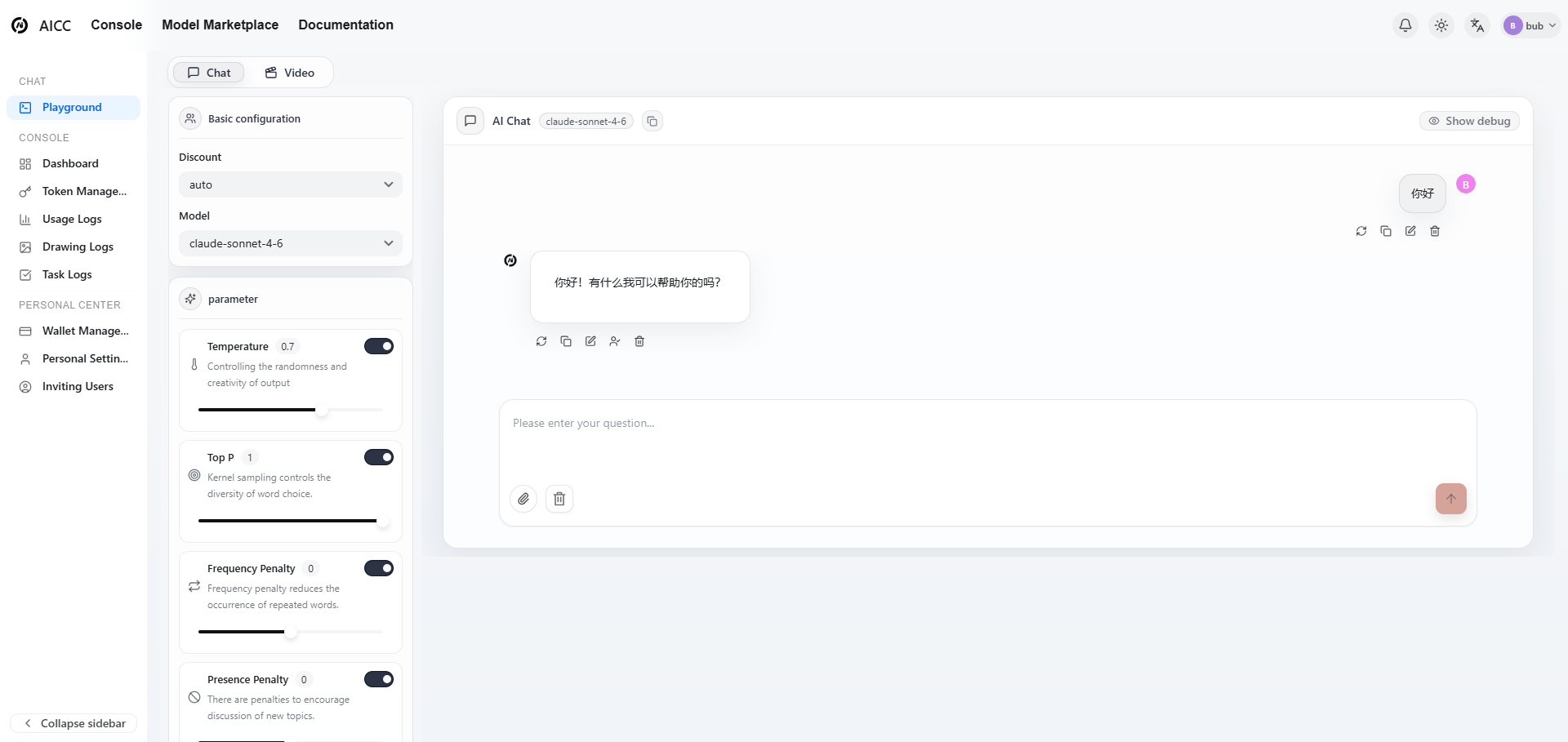
SINGAPORE, May 12, 2026 — AI.cc, the Singapore-based unified AI API aggregation platform, today published a comprehensive enterprise guide to unified AI API platforms, released in response to surging demand from engineering leads and technology procurement teams navigating an AI model landscape that added more than 255 significant model releases in Q1 2026 alone. The guide, available at no cost at docs.ai.cc/enterprise-guide, addresses the strategic and technical questions enterprise teams most commonly face when evaluating, adopting, and optimizing unified AI API infrastructure.
The publication arrives at a moment of acute decision complexity for enterprise AI teams. The simultaneous availability of GPT-5.5, Claude Opus 4.7, DeepSeek V4, Gemini 3.1 Pro, Llama 4, Qwen 3.6-Plus, and more than 300 additional models — each with distinct capability profiles, pricing structures, context window sizes, and licensing terms — has made AI infrastructure selection one of the highest-stakes technical decisions an engineering organization can make in 2026. Choosing poorly means either overpaying by 60–80% for capability that is not needed, or under-provisioning quality for tasks where output accuracy directly affects business outcomes.
"Enterprise teams are telling us the same thing across every region: the model choice problem has become genuinely hard," said an AI.cc spokesperson. "Twelve months ago the answer was usually GPT-4. Today there are seven credible frontier models and fifty credible cost-efficient models, and the optimal answer depends on your specific workload, budget, compliance requirements, and geographic market. We built this guide because the decision framework matters as much as the technology."
What Is a Unified AI API Platform — and Why It Matters Now
A unified AI API platform is infrastructure that aggregates access to multiple AI model providers through a single standardized endpoint, authentication system, and billing relationship. Rather than integrating separately with OpenAI, Anthropic, Google, DeepSeek, Meta, and Alibaba — each with distinct API formats, SDK requirements, and vendor management overhead — development teams integrate once and access the full model landscape through a single interface.
The practical significance of this architecture has grown nonlinearly with the number of models enterprises are actively deploying. AI.cc's own platform data shows the average enterprise account actively called 4.7 distinct models in Q1 2026, up from 2.1 in Q1 2025. At 2.1 models, managing two direct integrations is manageable. At 4.7 — and trending toward 6 or more by year-end — the integration and vendor management overhead of direct provider relationships becomes a material drag on engineering productivity.
The guide identifies five enterprise use cases where unified API platforms deliver the clearest measurable value:
Multi-model agent development, where production workflows require coordinating three to seven models across task planning, execution, retrieval, and output generation subtasks — an architecture that is impractical to maintain across separate provider integrations at production scale.
Cost optimization at volume, where intelligent routing across model tiers reduces blended token costs by 60–80% versus single-frontier-model deployment — a difference that reaches hundreds of thousands of dollars annually at enterprise processing volumes.
Multilingual and multi-regional deployments, where optimal model selection varies by language — Chinese-language tasks routing to Qwen or DeepSeek, European-language tasks routing to Mistral, English-language tasks routing to Claude or GPT — in a pattern that requires simultaneous access to models from multiple provider ecosystems.
Vendor risk management, where diversification across US-based, Chinese, and European model providers hedges against provider-specific regulatory, pricing, or service disruption risks that enterprise risk frameworks increasingly require to be addressed.
Rapid model evaluation and adoption, where the ability to evaluate any new frontier model within hours of its release — by changing a single API parameter rather than completing a new vendor integration — sustains competitive advantage in a landscape where new state-of-the-art models release every few weeks.
The Five Questions Every Enterprise Must Answer Before Choosing a Platform
The guide structures its vendor evaluation framework around five questions that AI.cc recommends every enterprise technology team answer before committing to a unified AI API platform.
1. Does the platform cover the full model spectrum your workloads require?
Model coverage is the foundational evaluation criterion, and the differences between platforms are more significant than they appear on surface-level comparisons. Most aggregators cover OpenAI and Anthropic models comprehensively. Meaningful differentiation emerges in three areas: coverage of Chinese-origin models (DeepSeek V4, Qwen 3.6-Plus, GLM-5.1, Kimi K2.5, Doubao, MiniMax M2.5), speed of new model integration following public launch, and coverage of specialized model categories including video generation, voice synthesis, OCR, and high-performance embedding models. Enterprises building for Asian markets or deploying multilingual agents should weight Chinese-origin model coverage heavily — it is the dimension on which Western-centric aggregators most consistently fall short.
2. What is the realistic total cost of ownership, including integration, routing optimization, and ongoing maintenance?
Published per-token pricing is the starting point, not the complete picture. Total cost of ownership includes the engineering time required to implement and maintain routing logic, the cost of suboptimal routing during the period before optimization is complete, the operational overhead of monitoring and debugging across multiple model endpoints, and the ongoing cost of keeping integrations current as model APIs evolve. Platforms with OpenAI-compatible formatting, built-in routing recommendations, and integrated observability materially reduce total cost of ownership beyond the per-token rate card.
3. What reliability and SLA guarantees are contractually available?
Enterprise production deployments require contractual uptime commitments, defined incident response procedures, and financial remedies for SLA breaches. The guide recommends enterprise teams evaluate not just the platform's own uptime SLA but its approach to provider-level failures — specifically whether the platform provides automatic failover to equivalent models during provider outages, and whether this failover is covered by the SLA or treated as a best-effort feature.
4. What is the platform's compliance posture for your industry and geography?
Data handling, processing agreements, residency requirements, and regulatory certifications vary significantly across unified API platforms. Enterprises in financial services, healthcare, and government sectors face the strictest requirements. Singapore-headquartered platforms like AI.cc offer PDPA alignment and a regulatory environment increasingly recognized as favorable for AI infrastructure serving Asian markets. European enterprises should evaluate GDPR processing agreement availability. US enterprises in regulated industries should assess SOC 2 and HIPAA-relevant data handling practices.
5. Does the platform provide agent orchestration infrastructure, or only raw API access?
As agentic AI workloads become the dominant enterprise deployment pattern — AI.cc's platform data shows agent-pattern API calls growing 680% year-over-year in Q1 2026 — the presence or absence of production-ready agent orchestration infrastructure is an increasingly material evaluation criterion. Platforms that provide only raw API aggregation require enterprise teams to build custom routing, fallback, context management, and observability infrastructure for every agent project. Platforms that provide a native agent framework — such as AI.cc's OpenClaw — compress agent development cycles by 60–70% and reduce production incidents attributable to orchestration failures.
2026 Model Selection Framework: Matching Models to Workloads
A central section of the guide provides a practical model selection framework organized by workload category — the first publicly available such framework based on observed production deployment patterns rather than benchmark rankings alone.
For complex reasoning and long-context analysis — legal document review, financial report synthesis, technical architecture evaluation — the guide recommends Claude Opus 4.7 as the primary model, with GPT-5.5 as an alternative for tool-use-heavy reasoning workflows. Cost consideration: reserve this tier for tasks where reasoning depth demonstrably affects output quality.
For standard response generation and customer interaction — conversational AI, content drafting, structured output generation — Claude Sonnet 4.6 and GPT-5.4 represent the optimal price-performance balance at $3 and $2.50 per million input tokens respectively. Gemini 3.1 Flash offers a lower-cost alternative at $1.00 per million for teams where Google ecosystem integration provides additional value.
For high-volume classification and simple query resolution — intent detection, content filtering, structured data extraction, batch processing — DeepSeek V4-Flash at $0.14 per million input tokens and Qwen 3.5 9B at $0.10 per million deliver frontier-adjacent accuracy at cost levels that make high-volume deployment economically viable. The guide notes that routing 60–70% of enterprise API traffic to this tier, where task complexity permits, is the single highest-impact cost optimization available.
For scientific and multimodal reasoning — image analysis, document OCR, scientific literature processing — Gemini 3.1 Pro's leading 94.3% GPQA Diamond score and native multimodal architecture make it the clear recommendation. GPT-5.5's multimodal capabilities offer a strong alternative for teams already embedded in OpenAI's tooling ecosystem.
For coding agents and software development automation — automated code review, repository-scale refactoring, test generation, technical documentation — Claude Opus 4.7 via Claude Code leads SWE-bench Verified at 80.9%. GLM-5.1 at $3 per month subscription pricing offers exceptional value for coding-heavy workloads where open-source licensing and cost efficiency are the primary constraints.
For long-context retrieval and document processing — processing entire codebases, legal document collections, or extended conversation histories — Llama 4 Scout's 10 million token context window is unmatched. For closed-source requirements, Gemini 3.1 Flash's 1 million token context at $0.25 per million input tokens offers strong value.
Accessing the Guide and AI.cc's Platform
The complete 2026 Enterprise Guide to Unified AI API Platforms is available at no cost at docs.ai.cc/enterprise-guide. The guide includes the full vendor evaluation framework, model selection decision trees, cost benchmark data, compliance checklist, and a step-by-step migration guide for teams transitioning from single-provider direct integrations.
Enterprises interested in evaluating AI.cc's platform can register for instant API key access with free starter tokens at www.ai.cc — no credit card required. The OpenAI-compatible API format means existing integrations can be tested against AI.cc's full model catalog with a single endpoint change.
Enterprise plans with SLA guarantees, dedicated support, volume pricing, and compliance documentation are available at www.ai.cc.
About AI.cc
AI.cc is a unified AI API aggregation platform headquartered in Singapore, providing developers and enterprises with access to 312 AI models — including GPT-5.5, Claude Opus 4.7, Gemini 3.1 Pro, DeepSeek V4, Llama 4, Qwen 3.6-Plus, GLM-5.1, Grok 4, and more — through a single OpenAI-compatible API. The platform supports text, image, video, voice, code, embedding, and OCR model categories. Additional offerings include the OpenClaw AI agent framework, enterprise plans with SLA guarantees, AI application development services, and AI Translator API.
Free API access: www.ai.cc
Documentation: docs.ai.cc
AICC
AICC
+44 7716940759
support@ai.cc
Legal Disclaimer:
EIN Presswire provides this news content "as is" without warranty of any kind. We do not accept any responsibility or liability for the accuracy, content, images, videos, licenses, completeness, legality, or reliability of the information contained in this article. If you have any complaints or copyright issues related to this article, kindly contact the author above.
