

South Korea Leads Naphthenic Base Oil Market with Shell, Nynas, Calumet Driving Growth and Innovation
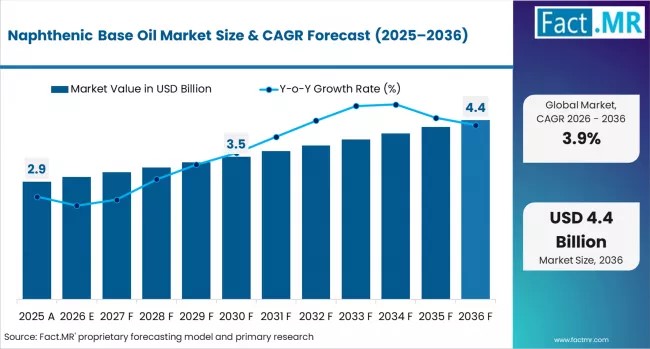
Transformer oil demand, rubber processing expansion, and refinery innovation accelerate South Korea’s naphthenic base oil outlook through 2036
ROCKVILLE, MD, UNITED STATES, April 14, 2026 /EINPresswire.com/ -- According to Fact MR, latest analysis, the South Korea naphthenic base oil market is gaining strategic momentum as industrial demand intensifies across electrical infrastructure, automotive manufacturing, and heavy industries. The global naphthenic base oil market is valued at USD 2.98 billion in 2026, projected to reach USD 4.37 billion by 2036, expanding at a CAGR of 3.9%. Within this landscape, South Korea is outperforming the global average, growing at 4.2% CAGR through 2036.The market is expected to cross USD 210–230 million by 2026 in South Korea, supported by transformer oil demand and rising process oil consumption in tire manufacturing. By 2036, the regional market is projected to exceed USD 340 million, unlocking an incremental opportunity of over USD 120 million.
Get detailed market forecasts, competitive benchmarking, and pricing trends: https://www.factmr.com/connectus/sample?flag=S&rep_id=7321
Quick Stats
Market Size (2026): USD 2.98 Billion (Global)
South Korea Market (2026): ~USD 220 Million
Market Size (2036): USD 4.37 Billion (Global)
CAGR (South Korea): 4.2% (2026–2036)
Incremental Opportunity: ~USD 120 Million (South Korea)
Leading Segment: Process Oils (46% share)
Leading Viscosity Grade: 80–130 SUS (27% share)
Key Players: Shell Plc, Ergon International Inc., Apar Industries Ltd., Calumet Specialty Products, Petrobras
Executive Insight for Decision Makers
South Korea’s market is shifting from volume-based procurement to performance-driven sourcing, particularly in electrical insulation and rubber processing applications.
OEMs and utilities must prioritize multi-refinery sourcing strategies to mitigate supply risks.
Manufacturers should invest in hydrotreating technologies to meet low-aromatic and environmental standards.
Investors should focus on specialty oil portfolios aligned with renewable energy infrastructure.
Market Dynamics
Key Growth Drivers
Rapid grid modernization and renewable energy integration boosting transformer oil demand
Expansion of tire and rubber manufacturing in export-driven industries
Rising demand for metalworking fluids in precision engineering
Strong electronics and heavy industry base driving specialty lubricant consumption
Key Restraints
Limited availability of naphthenic crude feedstock
Increasing competition from synthetic and bio-based oils
Volatility in crude oil prices impacting margins
Emerging Trends
Shift toward low-aromatic, environmentally compliant oils
Development of bio-based and hybrid naphthenic formulations
Strategic long-term supply contracts replacing spot procurement
Increasing adoption in renewable energy transformers
Segment Analysis
Leading Segment: Process oils dominate with 46% market share, driven by tire and rubber manufacturing demand.
Fastest-Growing Segment: Electrical oils, expanding at 3.7% CAGR, supported by power grid upgrades.
By Viscosity Index
80–130 SUS leads due to versatility across applications
400–800 SUS is the fastest-growing segment due to heavy-duty industrial usage
Strategic Importance
Process oils ensure consistent demand stability
Electrical oils offer high-margin opportunities due to stringent performance requirements
Supply Chain Analysis (Critical Insight)
Value Chain Structure
Upstream (Raw Materials):
Naphthenic crude suppliers with limited global reserves
Midstream (Refining & Production):
Companies like Shell Plc and Ergon refine crude into base oils using hydrotreatment
Downstream (Blending & Distribution):
Lubricant formulators and distributors integrate additives and supply to industries
End-Users:
Electrical utilities (transformer oils)
Tire manufacturers (process oils)
Metalworking industries (lubricants)
Who Supplies Whom
Refineries → Supply base oils to lubricant formulators
Formulators → Deliver finished oils to industrial OEMs and utilities
Distributors → Bridge supply gaps for SMEs and regional buyers
Key Risk: Heavy reliance on limited refineries creates supply bottlenecks, making multi-sourcing critical.
Pricing Trends
Naphthenic base oil operates as a semi-specialty commodity with premium pricing for certified grades
Prices are influenced by:
Crude oil availability
Refining complexity
Environmental compliance certifications
Margin Insight:
Electrical oil grades command higher margins (15–25%)
Process oils operate on volume-driven margins
Regional Analysis
Top Countries by CAGR (2026–2036)
China – 4.5%
South Korea – 4.2%
Germany – 4.0%
Japan – 3.7%
USA – 3.5%
South Korea Growth Drivers
Strong electronics and power equipment manufacturing
Investments in renewable energy and smart grids
Export-oriented automotive and industrial production
Developed vs Emerging Markets
Developed markets focus on sustainability and compliance
Emerging markets prioritize volume expansion and infrastructure growth
Competitive Landscape
The market remains moderately consolidated, with a few global players dominating supply.
Key Players
Shell Plc
Ergon International Inc.
Apar Industries Ltd.
Calumet Specialty Products Partners L.P.
Petrobras
Competitive Strategies
Investment in refining technology and purity enhancement
Expansion into Asia-Pacific markets
Long-term supply agreements with OEMs
Focus on low-aromatic and eco-friendly products
Strategic Takeaways
For Manufacturers
Invest in feedstock flexibility and refining upgrades
Build multi-source procurement networks
For Investors
Target high-growth Asia-Pacific markets, especially South Korea
Focus on ESG-compliant lubricant solutions
For Marketers & Distributors
Strengthen local distribution networks
Promote application-specific performance benefits
Future Outlook
South Korea’s naphthenic base oil market will continue to evolve toward high-performance, sustainable formulations.
Renewable energy expansion will drive electrical oil demand
Innovation in bio-based oils will reshape product portfolios
Supply constraints will sustain premium pricing trends
Conclusion
South Korea stands as a high-growth node within the global naphthenic base oil market, driven by industrial strength and energy infrastructure expansion. As supply constraints tighten and demand for high-performance oils rises, companies that invest in innovation, diversification, and sustainability will capture disproportionate value.
Why This Market Matters
Naphthenic base oil is not a commodity—it is a critical enabler of modern industrial systems, from power grids to automotive manufacturing.
In South Korea, its strategic importance is amplified by the country’s leadership in electronics, energy, and export manufacturing, making it a key battleground for future lubricant innovation and supply chain control.
Unlock 360° insights for strategic decision making and investment planning: https://www.factmr.com/checkout/7321
To View Related Report:
2-Butanone Market https://www.factmr.com/report/1249/2-butanone-market
Phenol Derivatives Market https://www.factmr.com/report/1250/phenol-derivatives-market
Shipping Container Coatings Market https://www.factmr.com/report/1251/shipping-container-coatings-market
Plastic Lens Market https://www.factmr.com/report/1252/plastic-lens-market
About Fact.MR
Fact.MR is a global market research and consulting firm, trusted by Fortune 500 companies and emerging businesses for reliable insights and strategic intelligence. With a presence across the U.S., UK, India, and Dubai, we deliver data-driven research and tailored consulting solutions across 30+ industries and 1,000+ markets. Backed by deep expertise and advanced analytics, Fact.MR helps organizations uncover opportunities, reduce risks, and make informed decisions for sustainable growth.
S. N. Jha
Fact.MR
+ +1 628-251-1583
sales@factmr.com
Legal Disclaimer:
EIN Presswire provides this news content "as is" without warranty of any kind. We do not accept any responsibility or liability for the accuracy, content, images, videos, licenses, completeness, legality, or reliability of the information contained in this article. If you have any complaints or copyright issues related to this article, kindly contact the author above.
