

Neuroprosthetics Market Overview: Valued at USD 11.08 Billion in 2025 with 8.6% CAGR Through 2034
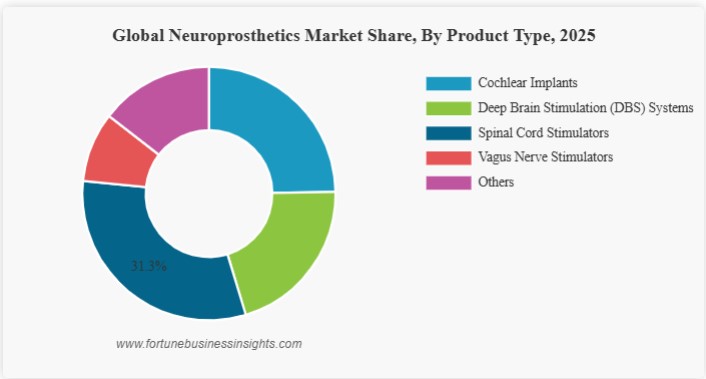
Neuroprosthetics Market Share
The neuroprosthetics market is led by key companies such as Medtronic, Boston Scientific, Abbott Laboratories, Cochlear, Sonova and more.
PUNE, MAHARASHTRA, INDIA, February 4, 2026 /EINPresswire.com/ -- Neuroprosthetic devices include cochlear implants, deep brain stimulation (DBS) systems, spinal cord stimulators, vagus nerve stimulators, and emerging brain-computer interfaces. Utilizing technologies such as invasive electrodes, minimally invasive leads, and non-invasive neural interfaces, these devices interpret neural signals and deliver targeted electrical stimulation. Their applications span across motor function improvement, sensory restoration, pain management, and treatment of psychiatric and cognitive disorders.The global neuroprosthetics market was valued at USD 11.08 billion in 2025 and is projected to grow from USD 11.98 billion in 2026 to USD 23.26 billion by 2034, reflecting a robust CAGR of 8.6% during the forecast period. Neuroprosthetics are advanced medical devices, either implantable or externally connected, designed to restore or enhance neural functions. These devices interact with the nervous system to support motor, sensory, and cognitive functionalities.
Request a free sample PDF:-https://www.fortunebusinessinsights.com/enquiry/request-sample-pdf/neuroprosthetics-market-105843
Market Drivers
The primary growth driver of the neuroprosthetics market is the increasing prevalence of neurological disorders worldwide. Conditions like Parkinson’s disease, epilepsy, and spinal cord injuries are rising, particularly among aging populations, thereby fueling demand for advanced neuroprosthetic solutions. In addition, rapid advancements in neural interface technologies are enhancing device efficacy, accuracy, and patient outcomes.
For instance, in May 2025, Epsilon Medical Inc. received FDA approval for its EP-01 endovascular EEG device, specifically designed for monitoring brain electrical activity in epilepsy patients, exemplifying innovation driving market expansion.
Market Restraints
Despite growth opportunities, the market faces challenges such as the high cost of devices, implantation, and maintenance. Advanced procedures like cochlear implants or DBS systems require specialized surgeons and long-term follow-ups, leading to high treatment expenses. Uneven insurance coverage also results in substantial out-of-pocket costs, limiting access to neuroprosthetic technologies in emerging markets and rural areas.
Emerging Opportunities
The industry is witnessing a shift towards minimally invasive and non-invasive devices that enhance patient comfort and convenience. Research and development activities are driving the creation of wearable stimulators, surface electrodes, non-invasive brain-computer interfaces, and compact neuromodulation tools. Such devices reduce the need for surgical intervention and improve patient acceptance.
For example, in October 2025, the University of Oxford’s NeuroMetrology Lab partnered with Clario to develop wearable sensor technology called Opal for comprehensive analysis of Parkinson’s disease, reflecting market focus on user-friendly solutions.
Market Trends
Connected and intelligent neuroprosthetic systems are a prominent trend. Modern devices can collect neural signals, monitor patient responses, and track activity in real-time. AI integration allows devices to analyze brain or nerve signals and fine-tune treatment, enhancing efficacy and minimizing side effects. Companies are investing in smart sensors, microchips, and software improvements to provide personalized therapy.
In November 2024, Neuralink received approval for a feasibility study on its brain implant and robotic arm, demonstrating innovation in brain-computer interface technologies and the growing importance of connected solutions in patient care.
Challenges and Ethical Considerations
Safety, regulatory, and ethical concerns pose challenges for market growth. Many neuroprosthetic devices interact directly with the brain, spinal cord, or major nerves, creating caution among healthcare providers and patients. Long-term data is limited for emerging technologies, particularly brain-computer interfaces. Additionally, privacy and ethical concerns arise from implants that monitor or influence brain activity, which may slow adoption in certain regions.
Segmentation Analysis
By Product Type
The market is segmented into cochlear implants, deep brain stimulation (DBS) systems, spinal cord stimulators, and vagus nerve stimulators. Among these, spinal cord stimulators are gaining prominence due to their superior treatment outcomes for chronic pain and mobility disorders.
By Technology
Neuroprosthetic technologies include invasive, minimally invasive, and non-invasive systems. The shift towards less invasive approaches is driven by patient preference and technological advancements, offering greater comfort and reduced surgical risk.
By Application
Key applications include motor function and movement disorders, sensory restoration, pain management, and psychiatric or cognitive disorders. The rising prevalence of neurological conditions across demographics is driving adoption in these areas.
By End-user
Hospitals, clinics, academic and research institutes are the primary end-users of neuroprosthetic devices. Hospitals and clinics dominate adoption due to high demand for patient treatment, while research institutes contribute to innovation and development of next-generation technologies.
Speack To Analyst:-https://www.fortunebusinessinsights.com/enquiry/request-sample-pdf/neuroprosthetics-market-105843
Regional Insights
North America leads the neuroprosthetics market due to a robust healthcare infrastructure, availability of advanced technologies, and high investment in R&D. Europe follows with increasing adoption of innovative devices and favorable reimbursement policies. The Asia-Pacific region is projected to witness significant growth owing to rising healthcare awareness, increasing neurological disorder prevalence, and expanding medical infrastructure.
Top Companies
Medtronic plc (Ireland)
Boston Scientific Corporation (U.S.)
Cochlear Limited (Australia)
Abbott Laboratories (U.S.)
LivaNova PLC (U.K.)
MED-EL Medical Electronics (Austria)
Sonova Holding AG (Switzerland)
NeuroPace, Inc. (U.S.)
Nevro Corp. (U.S.)
Blackrock Neurotech (U.S.)
These companies are driving growth through innovations, strategic collaborations, and product launches targeting better patient outcomes and operational efficiency.
Key Industry Developments
Recent market developments highlight ongoing innovation and adoption of advanced neuroprosthetic solutions. In July 2025, Neuros Medical successfully implanted its Altius electrical nerve stimulation system for chronic post-amputation pain treatment. In April 2025, Abbott launched a new electrode delivery system to streamline implantation procedures, enhancing efficiency and patient comfort.
Future Market Scope
The neuroprosthetics market is expected to expand significantly in the coming years, driven by technological advancements, rising neurological disorder prevalence, and increasing adoption of minimally invasive solutions. Growing interest in AI-powered, connected devices will further propel personalized treatments, improved monitoring, and superior patient outcomes. The combination of innovation, regulatory support, and patient-centric designs positions the neuroprosthetics industry for sustained growth and global impact.
Ashwin Arora
Fortune Business Insights™ Pvt. Ltd.
+1 83390 92966
email us here
Legal Disclaimer:
EIN Presswire provides this news content "as is" without warranty of any kind. We do not accept any responsibility or liability for the accuracy, content, images, videos, licenses, completeness, legality, or reliability of the information contained in this article. If you have any complaints or copyright issues related to this article, kindly contact the author above.
