

Aircraft Cabin Interior Market Set to Soar to USD 50.3 Billion by 2035 as Smart Cabin and Premiumization Take Flight
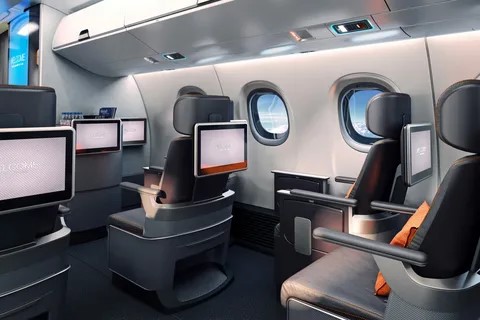
Aircraft Cabin Interior Market
The aircraft cabin interior market is projected to grow from USD 36.0 billion in 2025 to USD 50.3 billion by 2035, at a CAGR of 3.4%.
NEWARK, DE, UNITED STATES, January 20, 2026 /EINPresswire.com/ -- The global aircraft cabin interior market is entering a decade of sophisticated transformation, projected to ascend from USD 36.0 billion in 2025 to USD 50.3 billion by 2035. According to the latest industry intelligence, this trajectory reflects a compound annual growth rate (CAGR) of 3.4%, fueled by a global fleet modernization cycle, an intensified "arms race" in premium cabin configurations, and a radical shift toward lightweight, sustainable materials.
As airlines navigate the post-pandemic era, the cabin interior has evolved from a functional necessity into a high-stakes battleground for brand differentiation. The convergence of digital connectivity, passenger wellness, and operational efficiency is driving multi-billion dollar investment blocks over the next ten years.
The 5-Year Growth Block Assessment
The market is characterized by two distinct phases of expansion:
• 2025 – 2030: Optimization & Efficiency: Airlines are currently prioritizing seating layout optimization and storage efficiency. This phase is heavily influenced by the adoption of lightweight advanced composites to offset rising fuel costs and the massive backlog of narrow-body aircraft orders.
• 2030 – 2035: Digital Integration & Modular Design: The second half of the decade will see a surge in modular cabin systems, digital controls, and sound-reducing materials. This block will focus on "future-proofing" cabins with flexible architectures that allow for rapid reconfiguration between flight segments.
Request For Sample Report | Customize Report | Purchase Full Report -
https://www.futuremarketinsights.com/reports/sample/rep-gb-187
Key Market Performance Indicators
• Market Value: Projected to grow from USD 36.0 Billion in 2025 to USD 50.3 Billion by 2035.
• Leading Product: Aircraft Seats (remains the highest-value cabin component, currently holding a ~20.9% share).
• Primary Platform: Narrow-body Aircraft (single-aisle fleets dominate with a ~59.0% market share).
• OEM Market Share: Factory-installed interiors account for 62% – 65% of the total market value.
• MRO/Retrofit Share: The aftermarket and refurbishment segment represents 35% – 38% of the market, driven by fleet upgrades and modernization.
Dominant Segment: The Aircraft Seating Revolution
Aircraft seats remain the undisputed leader in the product segment, commanding 20.9% of the market share. The seating market is bifurcated by the push for ultra-high-density economy cabins and ultra-luxurious premium suites.
The Premium Surge
Legacy carriers including Delta, United, Lufthansa, and Emirates are implementing multi-billion dollar refurbishment programs. Modern business class seats, now costing between USD 50,000 and USD 150,000 per unit, feature lie-flat mechanisms, direct aisle access, and integrated privacy doors.
The "Slimline" Economy Movement
In the economy segment, the focus is on "slimline" ergonomics. Manufacturers like RECARO and Acro Aircraft Seating are utilizing titanium frames and composite shells to achieve 15-25% weight savings, allowing airlines to add additional rows while maintaining acceptable passenger legroom.
Narrow-body Aircraft Lead Primary Demand
Narrow-body (single-aisle) aircraft applications dominate the landscape with a 59.0% market share. With a global fleet exceeding 15,000 active aircraft and a production backlog of over 8,000 units for the Boeing 737 MAX and Airbus A320neo families, the demand for single-aisle interiors is relentless.
High utilization rates—averaging 10-12 flight hours daily—accelerate interior wear and tear, creating a robust and recurring aftermarket/MRO opportunity. Airlines are refreshing narrow-body interiors every 5-7 years to maintain competitive parity with the "long-haul feel" passengers now expect on medium-haul routes.
The "Smart Cabin" and IFEC Evolution
In-Flight Entertainment and Connectivity (IFEC) is the fastest-evolving tech segment. In 2026, passengers no longer accept sluggish internet.
• Connectivity: Satellite-based systems are now offering 100+ Mbps speeds, enabling seamless streaming.
• Power: USB-C and wireless charging are becoming standard across all cabin classes.
• Wellness: LED "mood-lighting" systems are being deployed to mitigate jet lag and improve passenger perception of cabin space.
Regional Growth Leaders: UK and Japan Outpace the Globe
While the US remains a massive mature market, the highest growth rates are seen in regions with high-tech manufacturing clusters.
United Kingdom (6.3% CAGR)
The UK is the global engine of cabin innovation. Home to specialists like Thompson Aero Seating and Acro Aircraft Seating, the region benefits from a deep aerospace heritage and the strength of the London Heathrow hub. British Airways’ "Club Suite" rollout has set a regional benchmark for premium retrofitting.
Japan (6.0% CAGR)
Japan’s growth is anchored by Jamco Corporation, a global leader in aircraft lavatories and galleys. Japanese carriers ANA and JAL continue to set the "gold standard" for interior luxury, driving the regional market toward high-spec, high-precision components.
Emerging Markets (India & Brazil)
India is witnessing a surge (4.3% CAGR) driven by historic aircraft orders from IndiGo and Air India. Brazil (2.8% CAGR) maintains its position through the regional jet dominance of Embraer and a growing domestic refurbishment sector.
Industry Hurdles: Supply Chains and Cost Pressures
Despite the bullish outlook, the industry faces significant headwinds. Delivery backlogs exceeding 10,000 aircraft—caused by Boeing 737 MAX production disruptions and Airbus supply chain constraints—have deferred cabin interior revenue recognition for many suppliers. Additionally, the premium cost of sustainable materials (recycled composites and bio-based plastics) remains a hurdle for smaller carriers navigating fuel price volatility.
Competitive Landscape
The market is moderately concentrated, with Tier 1 suppliers like Safran (Zodiac Aerospace), Collins Aerospace, and Panasonic Avionics controlling approximately 60% of the market. These giants are increasingly being challenged by "Technology Challengers" such as Geven and Diehl Aviation, who focus on modularity and weight reduction.
A Strategic Imperative
"The aircraft cabin is no longer just a place to sit; it is a complex digital environment and a key revenue driver," says a lead analyst at [Company Name]. "As we look toward 2035, the winners in this market will be those who can balance the weight-reduction demands of sustainability with the high-tech, high-comfort demands of the modern traveler."
Similar Industry Reports
Aircraft Cabin Interior Market
https://www.futuremarketinsights.com/reports/aircraft-cabin-interior-market
Aircraft Cabin Interiors Market
https://www.futuremarketinsights.com/reports/aircraft-cabin-interiors-market
Commercial Aircraft Cabin Interior Market
https://www.futuremarketinsights.com/reports/commercial-aircraft-cabin-interior-market
Sudip Saha
Future Market Insights Inc.
+1 347-918-3531
email us here
Legal Disclaimer:
EIN Presswire provides this news content "as is" without warranty of any kind. We do not accept any responsibility or liability for the accuracy, content, images, videos, licenses, completeness, legality, or reliability of the information contained in this article. If you have any complaints or copyright issues related to this article, kindly contact the author above.
